You open a Winston AI report and see a low Human Score. One paragraph is highlighted, but you remember writing it yourself. Before you edit anything, save the report and the draft it analyzed. Those two files let you work out what the scanner saw and show what was on the page at the time.
Winston AI’s Human Score is an overall prediction about the text. It does not count which words were written by a person. A low result is a reason to examine the passage and its context. What you do next depends on how the document was written and why someone ran the scan.
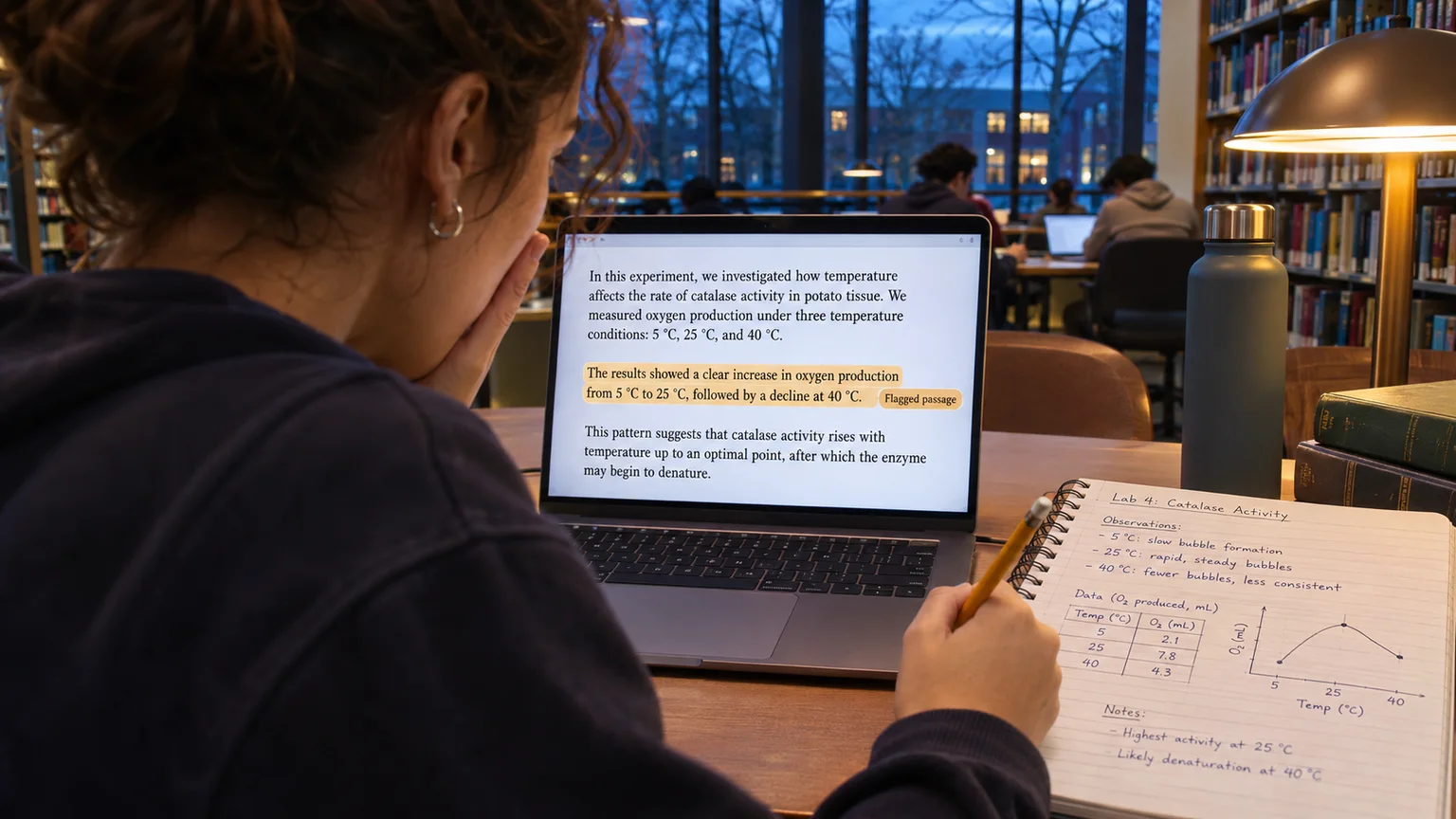
An illustrated example of a flagged lab report. Save the scanned draft and the notes you used to write it before revising the highlighted passage.
Read the report in this order
Start with the Human Score. In Winston’s guide to text scan results, higher scores indicate that the document more closely resembles human writing in the system’s assessment. If a report shows 20% Human Score, it does not follow that AI wrote exactly 80% of the words. The tool sees the submitted text; it does not observe how it was written.
Then open the AI Prediction Map. The colored passages let you find sections to review. A single highlighted sentence carries less context than the document-level assessment. Read the paragraph before and after it, and note if it is a direct quote, a methods description with required wording, a template, or something substantially different in style from its surroundings. None of those observations alone explains why the system made the prediction.
Check which report tab you’re on. Winston offers plagiarism checking separately from AI detection. Similarity results point to matching text or sources; authorship predictions assess writing patterns. If the scan shows a source match, inspect the matched passage and your attribution. If it shows an AI flag, look at the drafting process. A readability result is a different measure again.
A worked example: the methods paragraph gets flagged
Suppose you wrote a lab report and the map marks the sentence “Samples were incubated at 37 °C for 24 hours before absorbance was measured.” This is a fictional example, not a Winston test result. The sentence is conventional because the sequence and technical terms matter.
Check your lab notes first. Do they show the temperature, duration, and measurement? Does the rubric prescribe the format? If the sentence is properly sourced and reads clearly, replacing “incubated” with a less precise synonym would make the report worse. Keep the technical language and retain the evidence behind it. If the report’s own wording omitted something your notes support, such as which wavelength was used, you can correct that omission for the reader.
The same reasoning works in reverse. An unhighlighted sentence that has the wrong temperature is still wrong. Your original records matter in either case.
If the report is being used to question your work
Make a short chronology before replying. It can be as simple as: “I outlined the experiment from my notebook on Tuesday, drafted the methods on Wednesday, then corrected the measurement description after checking the instrument log.” Use your actual dates and records. Bring the version that was scanned, the relevant earlier drafts, and the applicable assignment policy. If you used an approved editing tool, describe which sections it touched and what you checked.
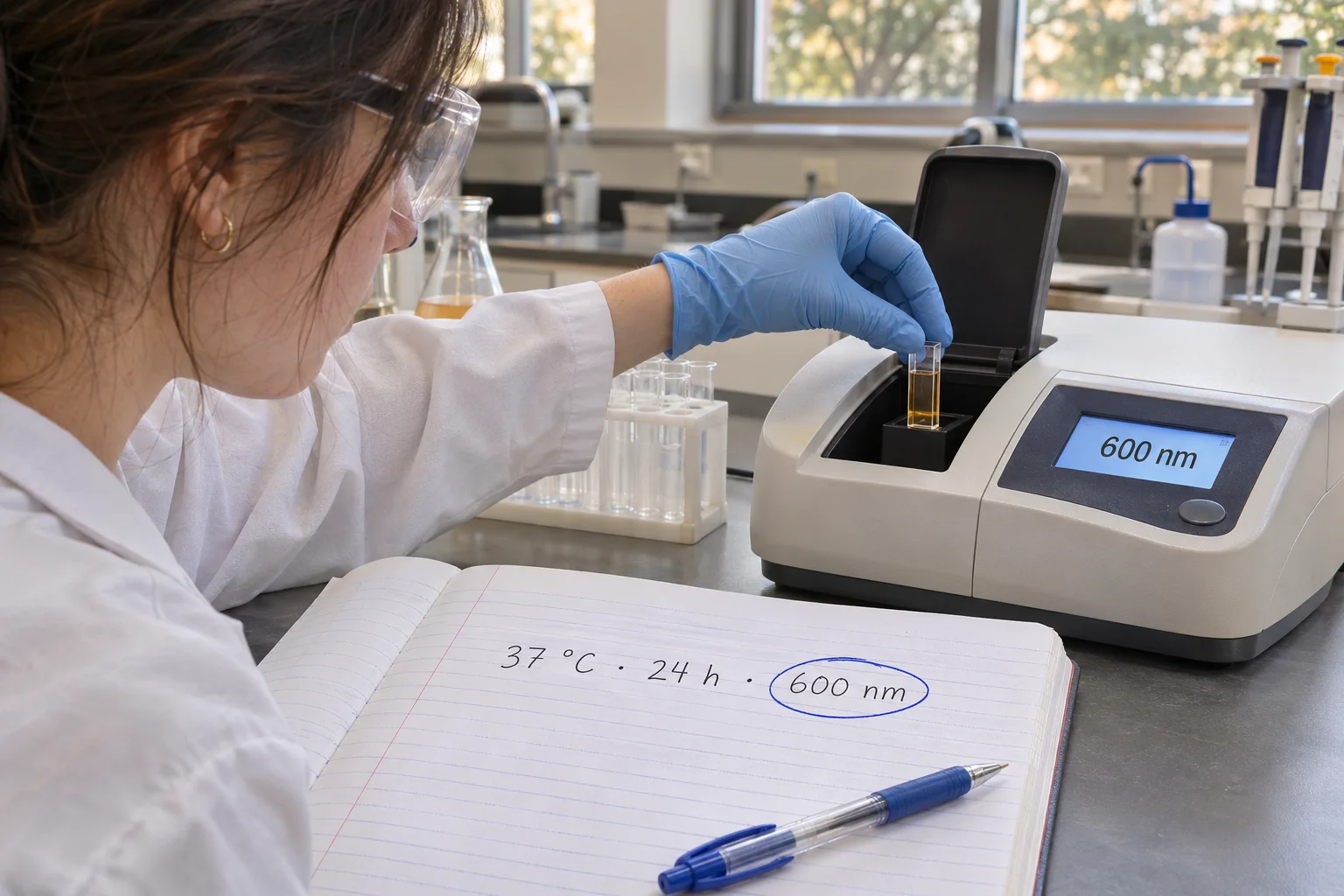
In the fictional methods example, the instrument displays the same wavelength as the lab notes. Keep those notes with the draft so a reader can trace where the added detail came from.
If you need to ask an instructor for clarification, start here and adapt the details:
Could you share the passage and report you’re reviewing? I can provide my outline, earlier drafts, and sources for that section. I’d like to understand how the report is being used under the course’s writing policy.
An instructor may have other evidence or a different version of the paper. Confirming the exact passage and policy makes for a more useful conversation than swapping scores from different tools. If you are doing your own check, Winston’s content guidance explains why continuous prose gives its detector more context than an isolated phrase or a table. Avoid uploading confidential text simply to get a second reading.
When editing is useful
Once you’ve saved the original, fix problems that you can point to: a vague conclusion, a sentence that bundles two claims together, or a transition that hides the connection between evidence and interpretation. If your assignment or publisher allows AI editing, you can use PaperHumanizer on one paragraph and compare the revision with the original for facts, sources, and tone. That is a writing step; it cannot verify authorship or promise a particular Winston score.
If you’re looking at results from more than one scanner, see what an AI detection percentage actually measures. The important question is what each number represents before you compare it with another one.